Product Description
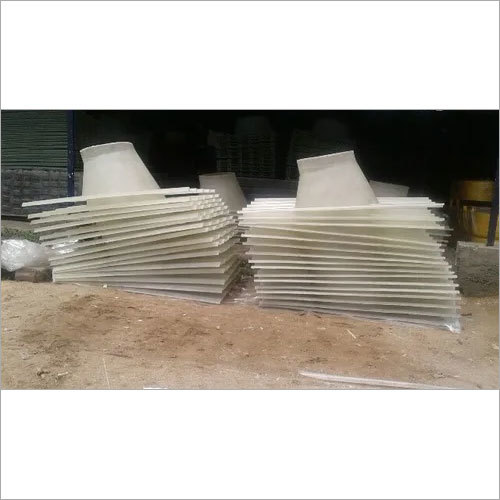
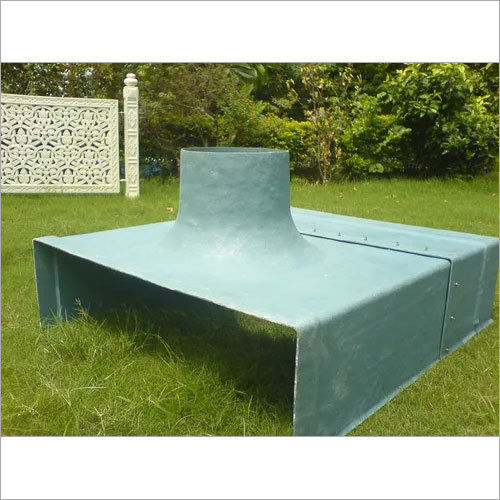
Accessible in customized size and diameter, these FRP Ventilator Base Plates are utilized for installing turbo ventilator on the roofs of concrete structures. Due to their high temperature proof surface, these base plates can endure harsh UV rays. Moreover, these have low contraction and thermal expansion rate which in turn help to avert their surface crack. Most importantly, these FRP plates have good light transmission capacity and are dust proof. Free from maintenance charge, these plates are effective in enhancing energy efficiency of turbo ventilator. Their application can be noticed in industrial buildings like warehouses and production units. We are an eminent manufacturer and exporter of standard grade FRP Ventilator Base Plates.
Features :
- Highly durable
- High temperature and UV proof
- Easy to install and maintain
- Dust proof surface
Outstanding Durability and Weather ResistanceEngineered for harsh industrial environments, FRP Ventilator Base Plates maintain high resistance against corrosion, impact, and UV degradation. Their robust construction ensures reliable performance under extreme temperatures ranging from -40C to 120C, making them suitable for varied weather conditions. The advanced composite material and UV-resistant gel coating significantly extend product lifespan even in challenging outdoor settings.
Effortless Installation and Tailored FitEach plate comes with pre-drilled mounting holes, simplifying the installation process. Sizes and thicknesses can be easily customizedfrom standard dimensions of 1200 mm x 600 mm x 50 mm to specific site requirements. The hand lay-up and moulding techniques ensure the right fit while the semi-gloss finish keeps maintenance minimal. This flexibility benefits both new builds and retrofits in industrial or commercial projects.
FAQs of FRP Ventilator Base Plates:
Q: How are FRP Ventilator Base Plates installed on the roof or industrial sheds?
A: Installation is straightforward, as each base plate includes pre-drilled mounting holes for secure attachment. The lightweight FRP material makes handling and alignment easy. Plates can be adapted in size and shape to match site-specific needs, allowing hassle-free integration with various ventilator types and roof structures.
Q: What makes these FRP base plates resistant to corrosion and environmental damage?
A: The base plates are made from high-quality fiber reinforced plastic, reinforced with E-glass or chopped strand mat. This composition, combined with a UV-resistant gel coat, offers superb resistance to chemicals, moisture, weathering, and rapid temperature fluctuations, ensuring long-term reliability in industrial or commercial environments.
Q: When should I choose a flame retardant or self-extinguishing option for my base plate?
A: Flame retardant or self-extinguishing options are recommended for facilities where fire safety regulations are stringent, or where theres elevated risk of heat or open flame exposure. These features can be specified upon request to maximize protection and compliance with industry safety standards.
Q: Where are FRP Ventilator Base Plates typically used?
A: They are ideal for mounting ventilators in industrial sheds, commercial building rooftops, dust and fume extraction areas, and other ventilation system installations. Their adaptability and strength make them suitable across diverse sectors, particularly where durability and corrosion resistance are required.
Q: What is the benefit of customized sizing and load capacity?
A: Custom sizing allows the base plates to be tailored to any application, ensuring a perfect fit and optimal load distribution for the specific site. Load capacity can be engineered, typically up to 100 kg/m2, maximizing support for various ventilator models and building requirements.
Q: How does the smooth or semi-gloss finish contribute to the products performance?
A: The smooth/semi-gloss finish not only improves aesthetic appearance but also resists dirt accumulation and facilitates easier cleaning. This treatment also contributes to lower maintenance needs and prolongs the functional and visual quality of the base plates.


 English
 Spanish
 French
 German
 Italian
 Chinese (Simplified)
 Japanese
 Korean
 Arabic
 Portuguese







 Send Inquiry
